As quickly as late February, a lunar lander will depart from NASA’s Kennedy House Heart on its approach to the moon carrying devices that might examine what’s simply beneath the floor. Barely two months into the yr, it’ll be the third mission to have set out on a journey towards the moon to this point in 2025. If 2024 was all about , 2025 is the yr of doubling down. Properly, except Trump and shift the main target to Mars below Elon Musk’s route, throwing off the entire timeline. However because it stands, it needs to be a busy yr for the moon.
Final yr kicked off with the launch of Astrobotics’ Peregrine lander, marking the primary of a number of missions led by firms working below multimillion-dollar contracts as a part of NASA’s Business Lunar Payload Providers (CLPS) program. Peregrine in the end after struggling a propellant leak post-launch, however only some weeks later, Intuitive Machines launched and on the moon — a primary for a non-public spacecraft. (Odysseus , however its payloads have been nonetheless capable of accumulate and transmit some knowledge).
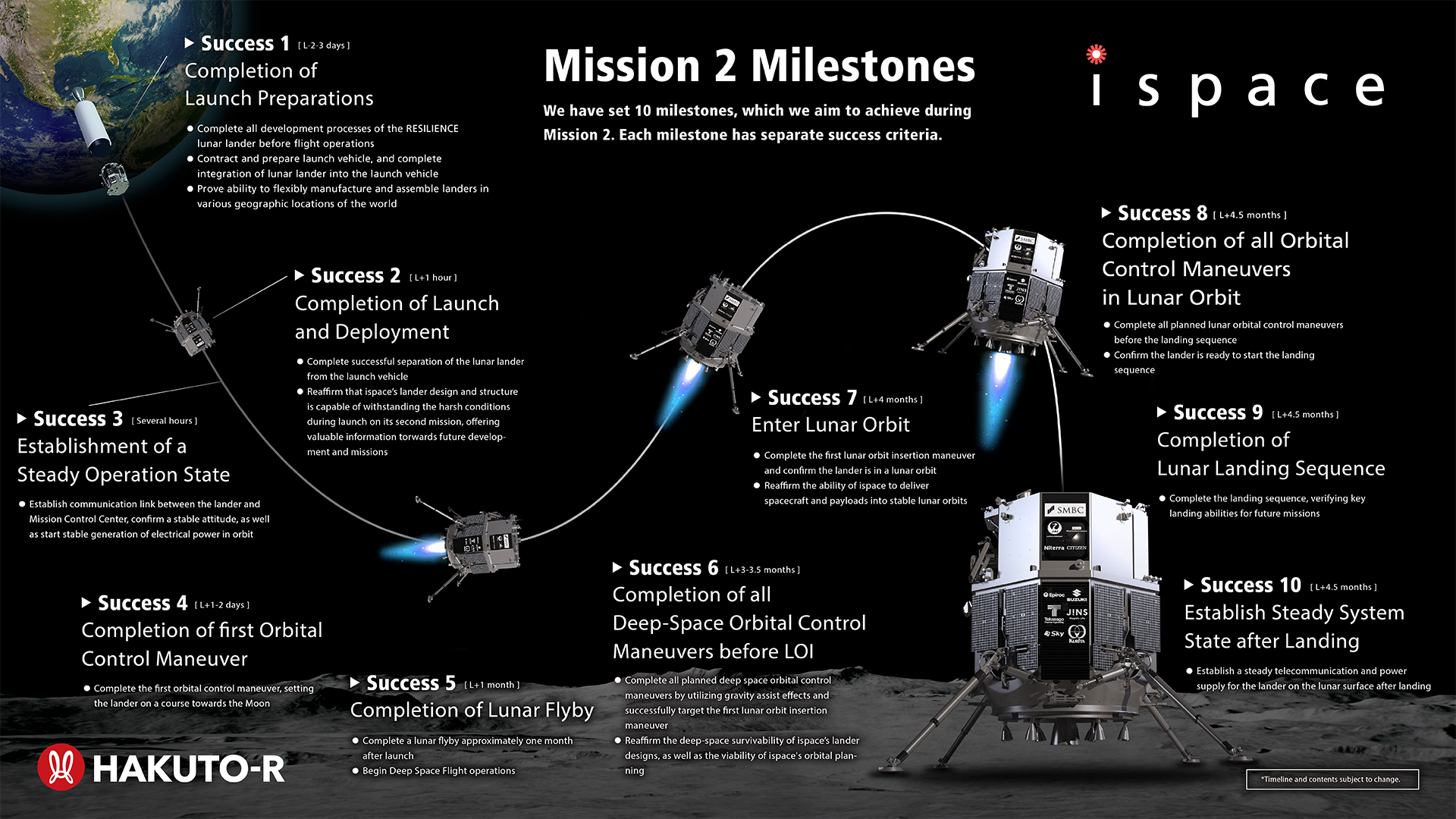
Now, fast-forward to this yr, and NASA has half a dozen CLPS missions on its schedule. The primary of those, Firefly Aerospace’s Blue Ghost Mission 1, launched on January 15 on a SpaceX Falcon 9 rocket. That very same rocket additionally carried a lunar lander made by the Japanese firm ispace, which is making endeavor, Hakuto-R.
Firefly’s lander, Blue Ghost, is anticipated to reach on the moon first, with a goal touchdown date of March 2 in an space referred to as Mare Crisium. The 6.6-foot-tall solar-powered spacecraft is carrying 10 science payloads for NASA and different companions. That features a new mud protect system to reveal how future missions may stop particulates from accumulating on spacecraft, devices for testing pattern assortment and International Navigation Satellite tv for pc System (GNSS)-based navigation and a radiation tolerant laptop. “The aims of the mission are to analyze warmth move from the lunar inside, plume-surface interactions, [and] crustal electrical and magnetic fields,” in keeping with NASA. “It is going to additionally take X-ray photographs of the Earth’s magnetosphere.”
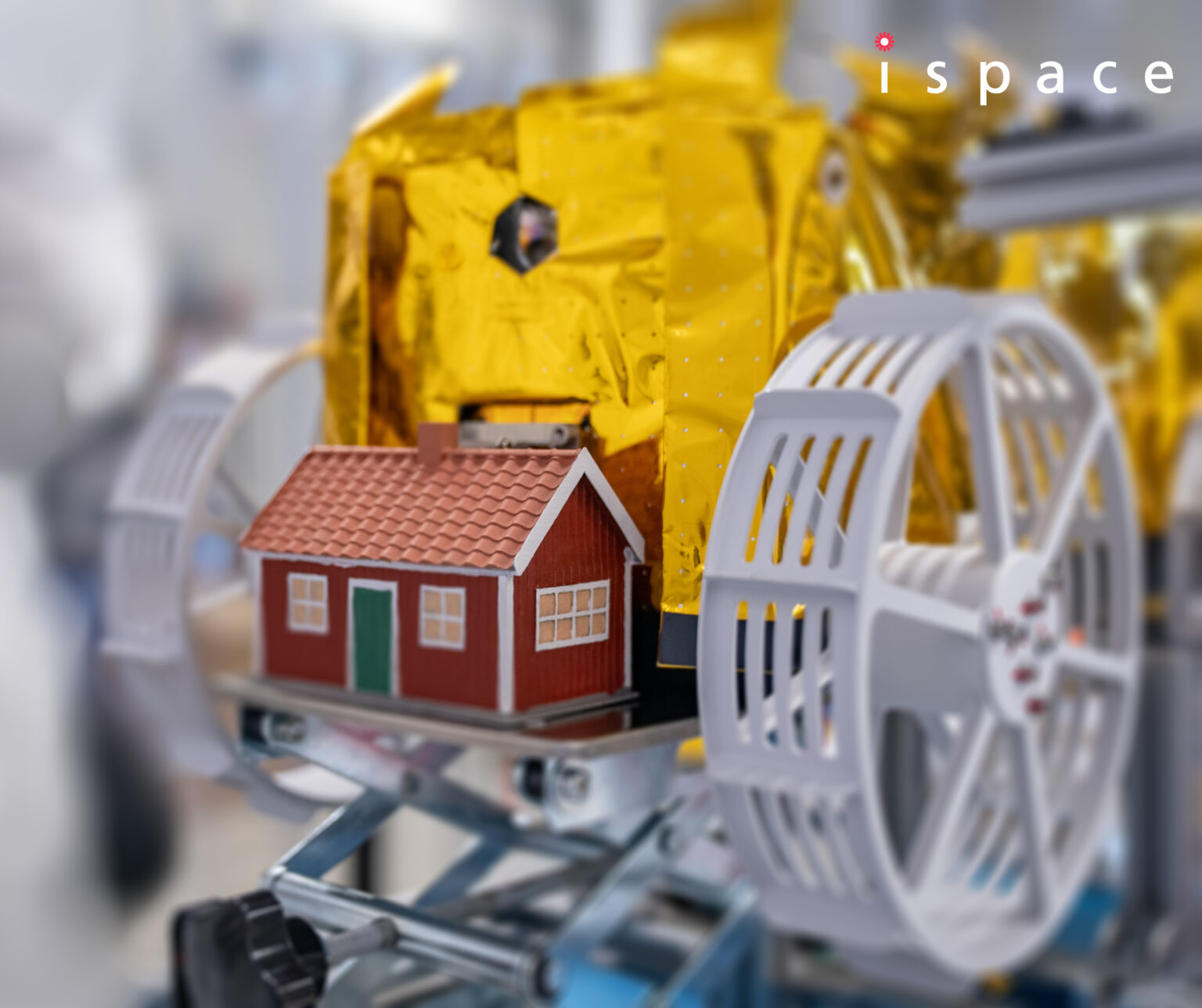
Resilience, the ispace lander, is taking a special, low-energy and gained’t attain its website, Mare Frigoris, till late Could or June. That craft has a micro rover referred to as Tenacious on board that’s designed to discover, accumulate floor materials and relay knowledge. Along with a digicam and shovel, Tenacious has a tiny mannequin home mounted on it — particularly the “,” by Swedish artist Mikael Genberg. The lander is carrying water electrolyzer gear, a deep house radiation probe and a meals manufacturing experiment module. (And the way might we neglect, it additionally comprises a commemorative alloy plate from Bandai Namco Analysis Institute made within the fashion of the Gundam franchise’s “Constitution of the Common Century”).
Intuitive Machines, the corporate that pulled off the first-ever business moon touchdown with its Odysseus craft final yr, is slated to launch its second CLPS mission within the subsequent month or so, across the finish of February. The IM-2 Nova-C lander dubbed Athena is headed to the lunar south pole with a meter-long drill and a mass spectrometer for NASA’s Polar Assets Ice Mining Experiment-1 (PRIME-1). Its aim is to reveal the feasibility of drilling for samples and analyzing these samples on-site for issues like water. may also function a rideshare for NASA’s Lunar Trailblazer, a small orbiter that can “research the shape, abundance and distribution of lunar water and its relation to geology.”
Apart from the PRIME-1 devices, Athena will transport a laser retroreflector array, an Intuitive Machines Micro-Nova Hopper — described as “a propulsive drone that deploys off of a Nova-C lander and hops throughout the lunar floor” — and a Lunar Floor Communication System “community in a field” made by Nokia. The 2 firms plan to arrange the moon’s first mobile community, which is “engineered to deal with floor connectivity between the lander and automobiles, carrying high-definition video streaming, command-and-control communications and telemetry knowledge.”
There’s an opportunity Blue Origin’s Blue Moon Mark 1 lunar lander will take its first journey to the moon as quickly as this spring or summer time. John Couluris, a senior VP at Blue Origin, stated in an interview with final March that “we’re anticipating to land on the moon between 12 and 16 months from in the present day.” On the time, the corporate hadn’t but launched its New Glenn rocket — which might be the automobile for this mission — even as soon as, in order that declare didn’t maintain a lot weight. However after many, many delays, in mid-January.
NASA revealed, in an FCC submitting noticed by again in August, that it had chosen Blue Origin’s lander to deliver a digicam system, the Stereo Cameras for Lunar Plume Floor Research (SCALPSS), to the moon’s south pole this yr below the CLPS program. Within the submitting, NASA notes that this must be performed earlier than 2025 is over, as the information collected by the instrument at touchdown will assist inform plans for the primary crewed Artemis moon touchdown. SCALPSS payloads have flown on different CLPS missions, however the thrust degree of Blue Origin’s Mark 1 lander is nearer to the dimensions of the Human Touchdown System will use for astronauts.
Blue Origin stated in one other the identical month that its demonstration lunar mission, Pathfinder, might launch as early as March 2025, SpaceNews reported. Don’t be stunned if it truly occurs a lot later.
The subsequent CLPS mission after that isn’t anticipated to take off till the autumn, when Astrobotic will get one other shot at touchdown on the moon. This time, it’ll be sending its bigger Griffin lander to a area close to the south pole. Griffin Mission 1 was initially supposed to hold NASA’s Volatiles Investigating Polar Exploration Rover (VIPER), however of that mission late final yr resulting from delays and rising prices. Astrobotic’s lander gained’t present as much as the moon empty-handed, although. It’ll have a tiny solar-powered CubeRover in tow, in addition to a laser retroreflector array to pinpoint the lander’s location.
We might even see a 3rd Intuitive Machines mission earlier than the tip of this yr. The corporate and NASA are eyeing late 2025 or early 2026 for the launch of IM-3, which is able to ship a set of devices targeted on learning the magnetic and plasma properties of the Reiner Gamma lunar swirl, an space with its personal “mini-magnetosphere.” A rover referred to as the Cellular Autonomous Prospecting Platform (MAPP) may also be on board, plus a trio of small rovers from the Cooperative Autonomous Distributed Robotic Exploration (CADRE) mission that can reveal largely autonomous robots working collectively. The European House Company’s MoonLIGHT laser retroreflector will fly with IM-3 too, together with and the Lunar House Setting Monitor, from South Korea’s Korea Astronomy and House Science Institute (KASI).
Whereas this yr is definite to deliver a variety of exercise on and across the moon, there’s one factor we gained’t see there simply but — people. NASA has adjusted the timeline of the Artemis missions a couple of instances for the reason that program’s announcement, and in December that it’s pushing the primary crewed flight, Artemis II, to April 2026. The company beforehand stated it was taking pictures for September 2025. Artemis III, the mission during which two astronauts will go to the lunar floor, now isn’t anticipated to launch till mid-2027.
This text initially appeared on Engadget at https://www.engadget.com/science/house/2025-is-going-to-be-another-big-year-for-commercial-moon-missions-160038622.html?src=rss
Trending Merchandise